Hiking the Dolomites Without a Tour Group: A Practical 5-Day Plan
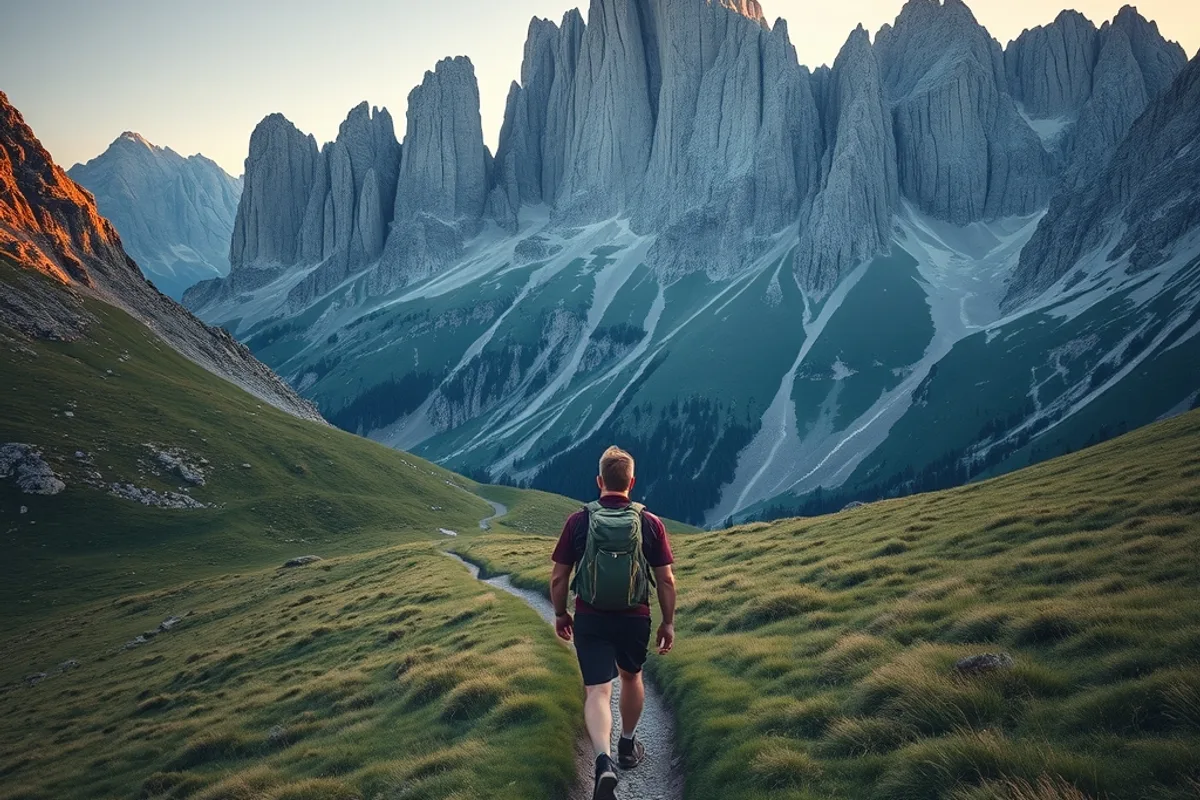
You do not need a guided tour to hike the Dolomites. You need booked huts, a realistic daily distance and a plan for the afternoon storms that arrive on schedule.
The Dolomites have a reputation as a place for guided expeditions. In practice, the core routes are well marked, the huts are used to independent walkers, and the cable cars and buses make it possible to link valleys without a car. What separates a good self-guided trip from a hard one is not bravery. It is booking discipline and honest daily distances.
This plan assumes five walking days, three nights in mountain huts and a base in a valley town at each end. It suits a reasonably fit hiker who can walk five to six hours with a day pack, and it deliberately keeps afternoons free because the weather decides more than the map does.
Why self-guided works in the Dolomites
The trail network is dense and signed. Major paths carry numbers, junctions have direction boards, and the via ferrata routes are separated from ordinary hiking trails. Hut wardens speak enough English and German to handle bookings and advice. The main risks are not navigation failures but overconfidence: starting too late, underestimating exposure, or assuming a summer forecast holds above 2,000 metres.
Self-guided travel also gives you the thing a group tour cannot: the option to stop. If a pass is socked in, you can take a valley walk, a cable car or a rest day without apologising to twenty strangers.
The five-day route
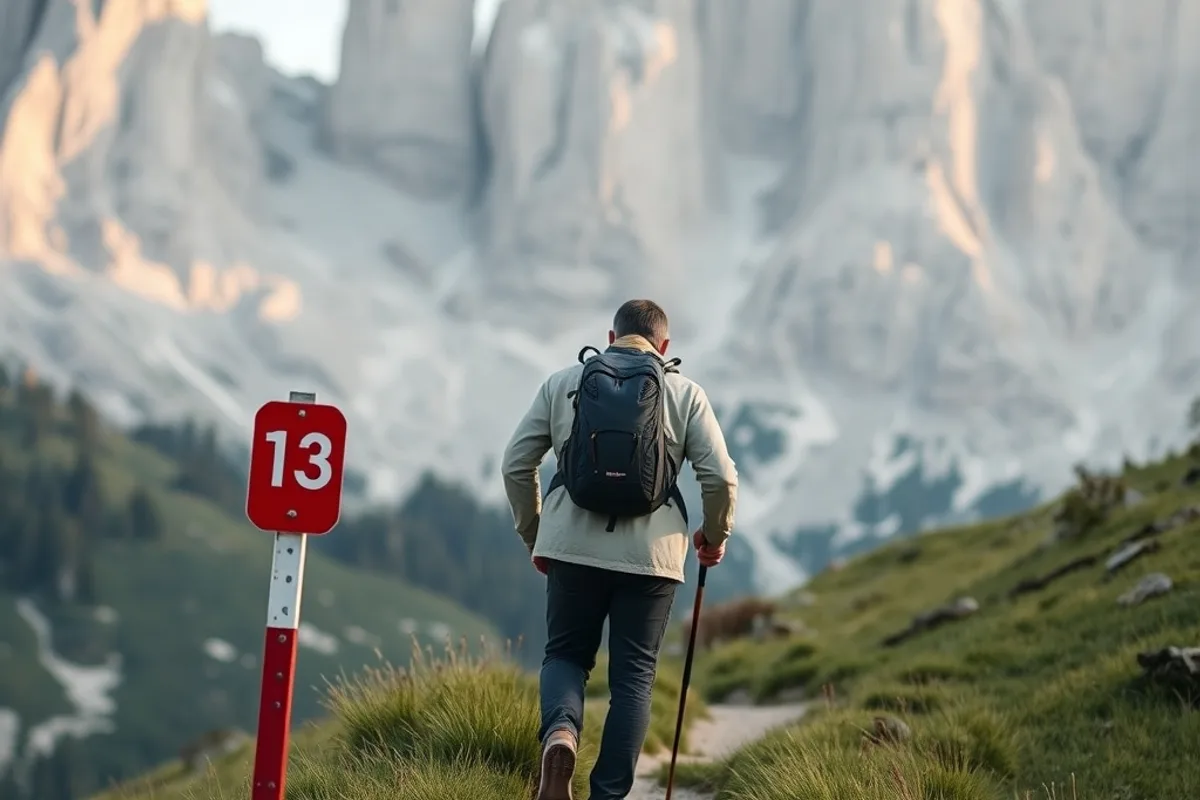
Use a valley base for the first and last night, then a hut-to-hut loop. The shape below is intentionally moderate; add distance only if you have recent multi-day experience.
- Day 1 — Valley to hut: 9–11 km, 700–900 m ascent. Start before 9 a.m., arrive by mid-afternoon, and treat the first day as acclimatisation.
- Day 2 — Pass crossing: 12–14 km, 600 m ascent, 800 m descent. The longest day. Leave early and carry water for the exposed section.
- Day 3 — Ridge variant: 8–10 km with a short secured section or a lower bypass. Choose the bypass if rain is forecast; wet limestone is slippery.
- Day 4 — Valley link: 11–13 km on a broad trail, with a cable car option for the final descent. This is the day to recover.
- Day 5 — Exit and transfer: 6–8 km to a bus stop or lift, then back to the valley base by mid-afternoon.
Distances in the Dolomites are deceptive. A 12 km day with 900 m of descent takes longer than the same distance at home. Use moving time, not distance, as your planning unit, and add 30 minutes for every 300 m of ascent.
Huts, half-board and bookings
Mountain huts, or rifugi, are the bottleneck. Popular huts sell out months ahead for July and August weekends. Book as soon as your dates are fixed, and book directly with the hut where possible. A typical half-board rate includes dinner, breakfast and a bed in a shared room; showers may cost extra or be unavailable.
Ask three questions before paying: Is the booking refundable, what happens if the pass is closed, and is dinner a fixed menu? A fixed menu is normal, and vegetarian options usually exist if requested in advance. If you have allergies, say so in writing at the time of booking, not at the table.
Book the bed before you book the flight. A cheap flight to a fully booked valley is an expensive mistake.
Weather windows and backup plans
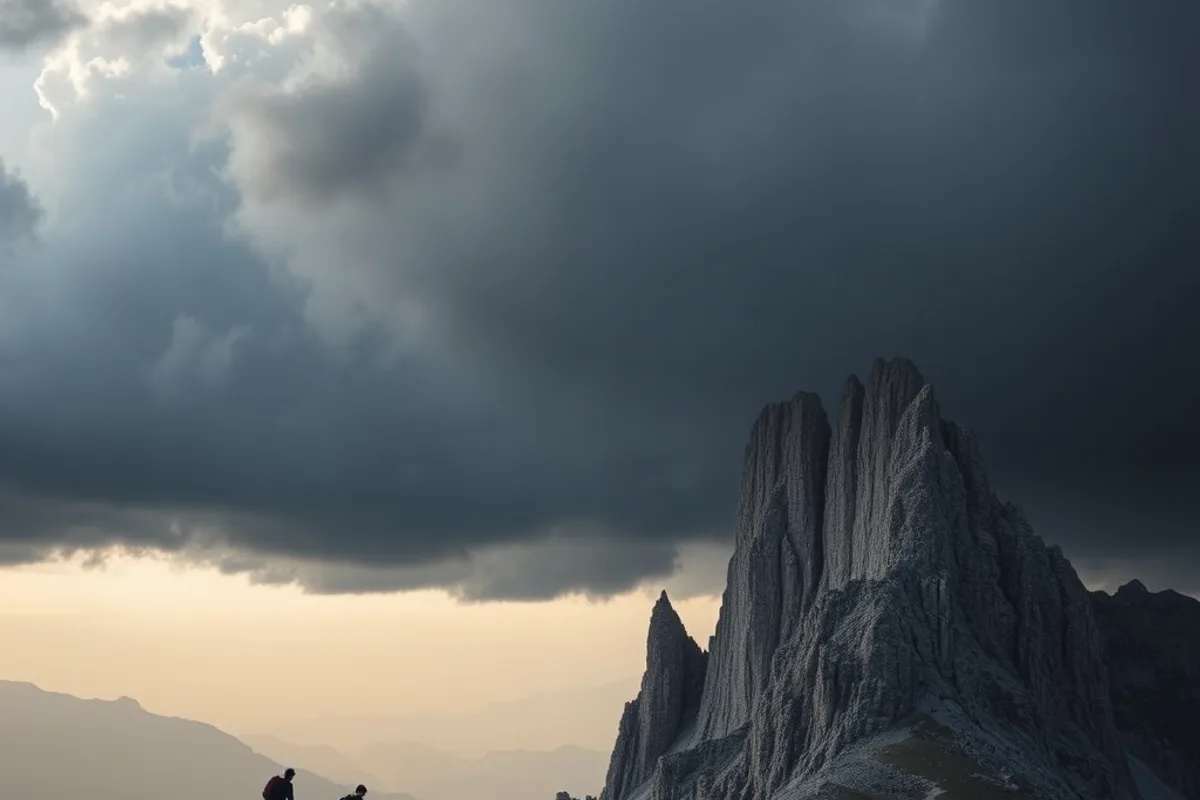
Summer thunderstorms are the default afternoon pattern. Plan to be on exposed ground before noon and below the treeline by 2 p.m. Check two sources each morning: the regional meteorological service and the local lift or tourist office. Forecasts above 2,000 m are less reliable than valley forecasts, so build slack into the plan rather than betting on a precise number.
Have a low-level alternative for each day: a valley circuit, a museum town, a lift-assisted viewpoint or a spa afternoon. The Dolomites are full of good bad-weather options, and using one is not a failure of the itinerary.
Packing list and realistic budget
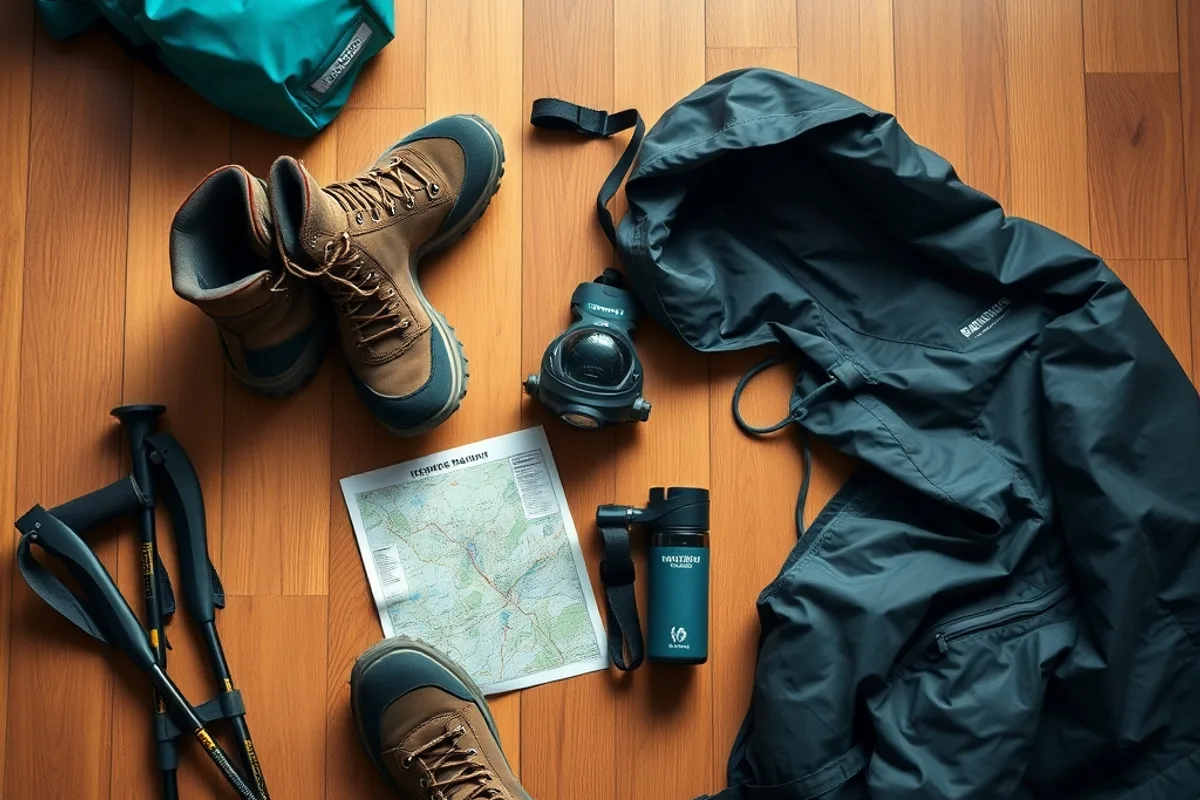
Carry a 30–35 litre pack, waterproof shell, warm mid-layer, sun protection, a headlamp, a basic first-aid kit and a refillable bottle. Trekking poles help on descents more than ascents. Hut slippers are provided, so leave the heavy camp shoes at home.
Budget roughly €55–€85 per person per hut night with half-board, €15–€25 for lift tickets when used, and €10–€20 per day for lunches and drinks. Add public transport and a valley hotel night at each end. A five-day self-guided trip typically costs 40–60% less than a guided package, with the savings coming from independence rather than discomfort.
The one place not to economise is footwear and a proper shell. Everything else can be borrowed, rented or lived without.
The bottom line
A self-guided Dolomites trip is a booking problem more than an adventure problem. Choose conservative distances, reserve huts early, start early, and keep a valley day in reserve. Do that, and the mountains do the rest.